
INFO: Dieser Abschnitt bietet eine ausführliche Erläuterung ausgewählter Aufgaben aus dem Fahrpersonal-Heft, Teil 1: Triebfahrzeugführer (Tf). Er dient dazu, diese Aufgaben anhand meiner Erfahrungen von FREMO-Treffen sowie praktischer Hinweise erfahrener Mitglieder zu erklären und zu verdeutlichen.
INFO: This section provides a detailed explanation of selected duties outlined in the Train Crew Booklet, Part 1: Locomotive Engineer. Its purpose is to explain and clarify these duties based on my experience from FREMO meets and practical tips contributed by experienced members.
In Part 1, I provided a checklist of tasks that a driver should complete before and after a duty, as well as key points to observe while on duty. Rather than repeating that information here, I will expand on selected topics to help you better understand your responsibilities and make your operating experience more enjoyable.
One important point to remember is that, at a FREMO meet, the roles of Driver and Conductor are combined about 99% of the time. In my own experience, I have encountered only one exception, at the Spabrücken 2025 meet, where separate duty plans (Dienstpläne) were issued for the Driver and the Conductor. Even then, both plans were essentially identical.
When the roles are split, each participant performs their respective duties. In all other cases, you will be responsible for carrying out both roles.
A Walkaround is a MUST
DO NOT underestimate the importance of a walkaround before starting your duty, even if you are already familiar with some of the modules. Every FREMO arrangement is unique, and a short reconnaissance tour can prevent a lot of confusion later in the session.
A walkaround helps you identify:
- Stations, customer sidings, bridges, and level crossings.
- Signal locations, especially on secondary lines, Ne 1 trapezoid boards.
- Duck-unders and other obstacles such as cables, equipment boxes beneath modules, narrow aisles, or other movement restrictions.
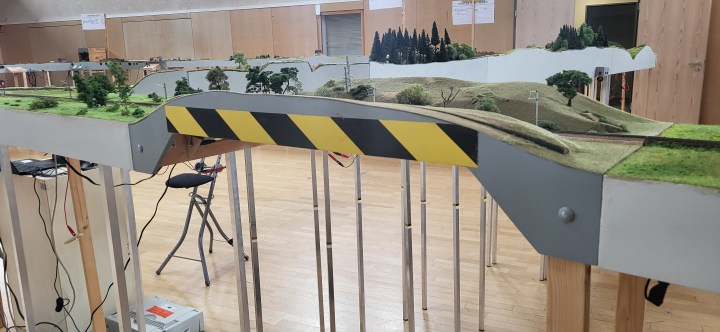
At each station and customer siding, take note of:
- The track layout, including main tracks, runaround/overtaking tracks, and sidings.
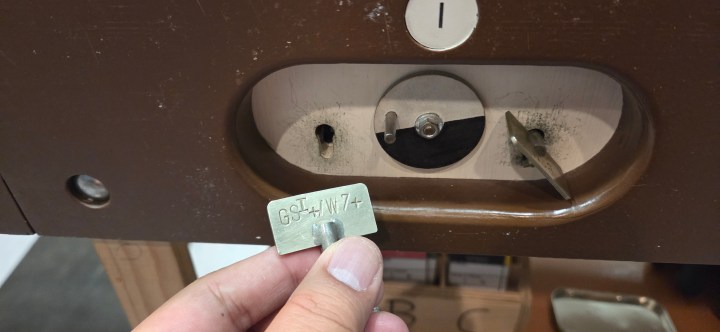
- The locations of all turnouts and derailers (Gleissperren).
- How local infrastructure is operated, including whether a B40 line key (Streckenschlüssel), conductor’s key (Zf-Schlüssel), or another key is required to unlock turnouts and derailers
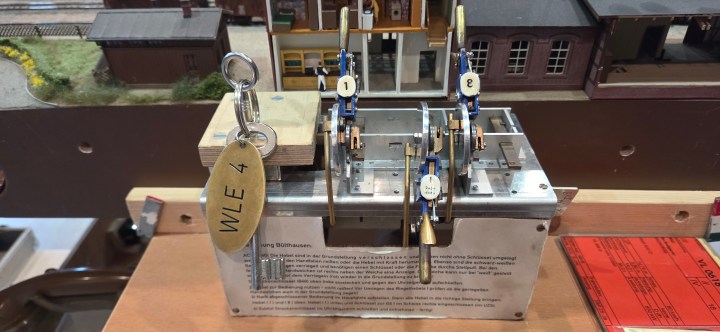
At each level crossing, identify:
- The location of the switch or control used to open and close the gates.
- Any special operating procedures.
TIPS:
- Attend the general walkaround on Day 1, but remember that it does not replace your own detailed walkaround.
- On subsequent days, perform another walkaround and make the same observations, especially if modules or operating procedures have changed.
- Use free time before your duty or during breaks to further explore the arrangement.
- Familiarise yourself with the operation of stations, sidings, and other operating points.
- Ask for a demonstration if you encounter equipment or operating mechanisms you do not know.
- Never force a lever, lock, turnout mechanism, or switch.
- If something does not operate as expected, stop and ask for assistance or report the issue to the module owner.
No Two FRED are the Same
Over the past 45 years, a wide variety of FREMO handheld throttles have been developed, from wired FRED(i) units to wireless wiFRED and WLFRED throttles. While the operating principle is similar, the controls and behaviour can vary between versions.
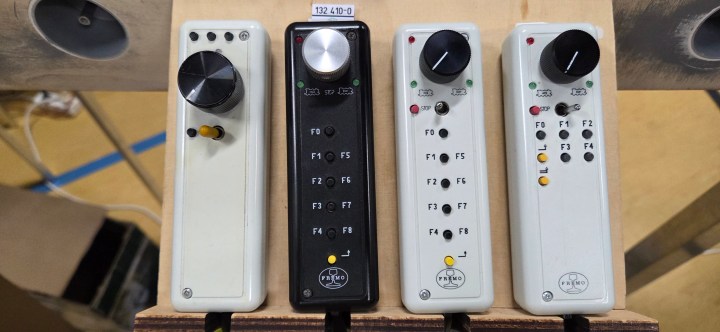
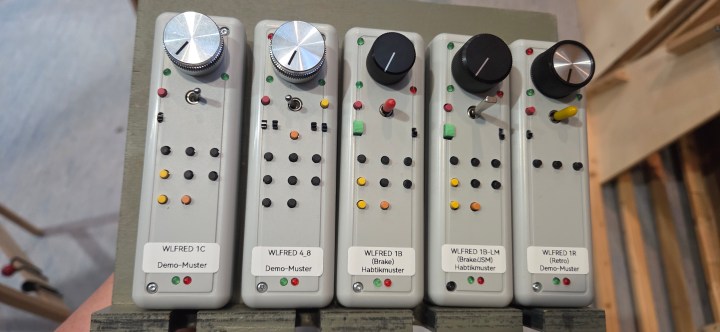
Before starting your duty:
- Familiarise yourself with the throttle you have been assigned.
- Learn the function of each button and control.
- Observe how the locomotive responds to the speed dial.
- Be aware that some throttles, such as the BRAKE-FRED, simulate acceleration and braking delays.
- Verify how direction changes, emergency stops, and function buttons operate.
Keep in mind:
- Most FREMO throttles control one locomotive at a time.
- Some wiFRED/WLFRED versions can control up to four locomotives.
- At a FREMO meet, each locomotive is typically assigned a dedicated FRED.
A few minutes spent learning your FRED can prevent operating mistakes and make your session more enjoyable.

